Between May and August, our canvassers knocked on doors in dozens of cities, from Eugene, Oregon, to Chapel Hill, North Carolina. The conversations they had led to public comments, signed petitions and meetings with lawmakers to build support for wildlife crossings, reducing plastic waste, expanding the right to repair, and more. Here’s some of what the summer looked like.
Making the case for right to repair
Much of the summer’s canvassing efforts for PIRG focused on the right to repair — the idea that people should be able to fix the electronics they own, or choose who fixes them, instead of replacing them. Repairing and keeping our devices in use longer could help divert thousands of junked electronics that contribute to the 6.9 million tons of electronic waste America produces each year.
In Michigan, canvassers in Ann Arbor collected thousands of public comments and brought them to the state Capitol in Lansing in support of PIRGIM’s campaign.
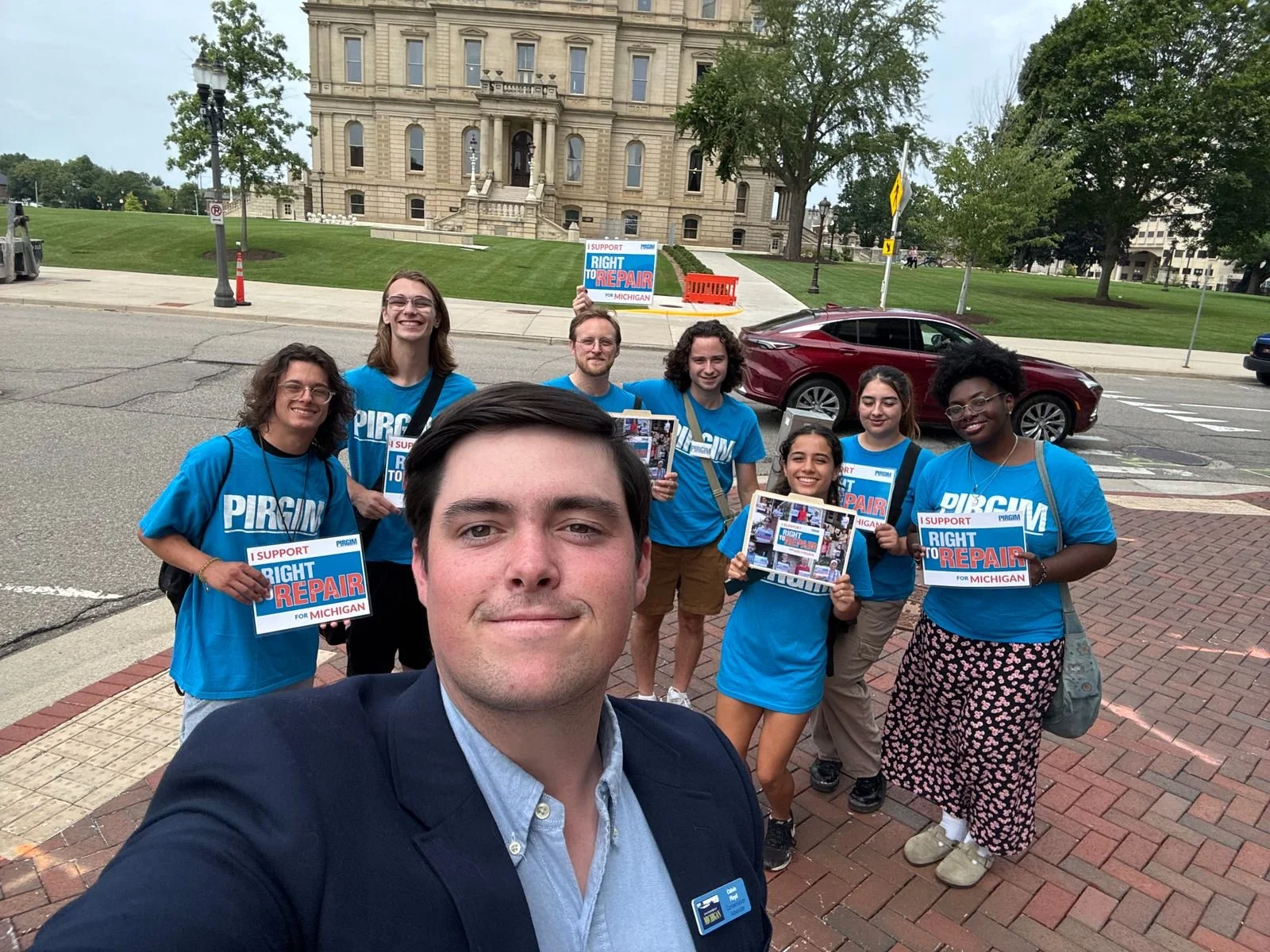
The Ann Arbor canvass team delivering comments in support of PIRGIM’s right to repair campaign. Credit: Staff
Around the country, canvassers staged an “e-waste graveyard,” a display of discarded electronics meant to show what gets thrown away when repair is no longer possible. Some displays drew local television coverage.
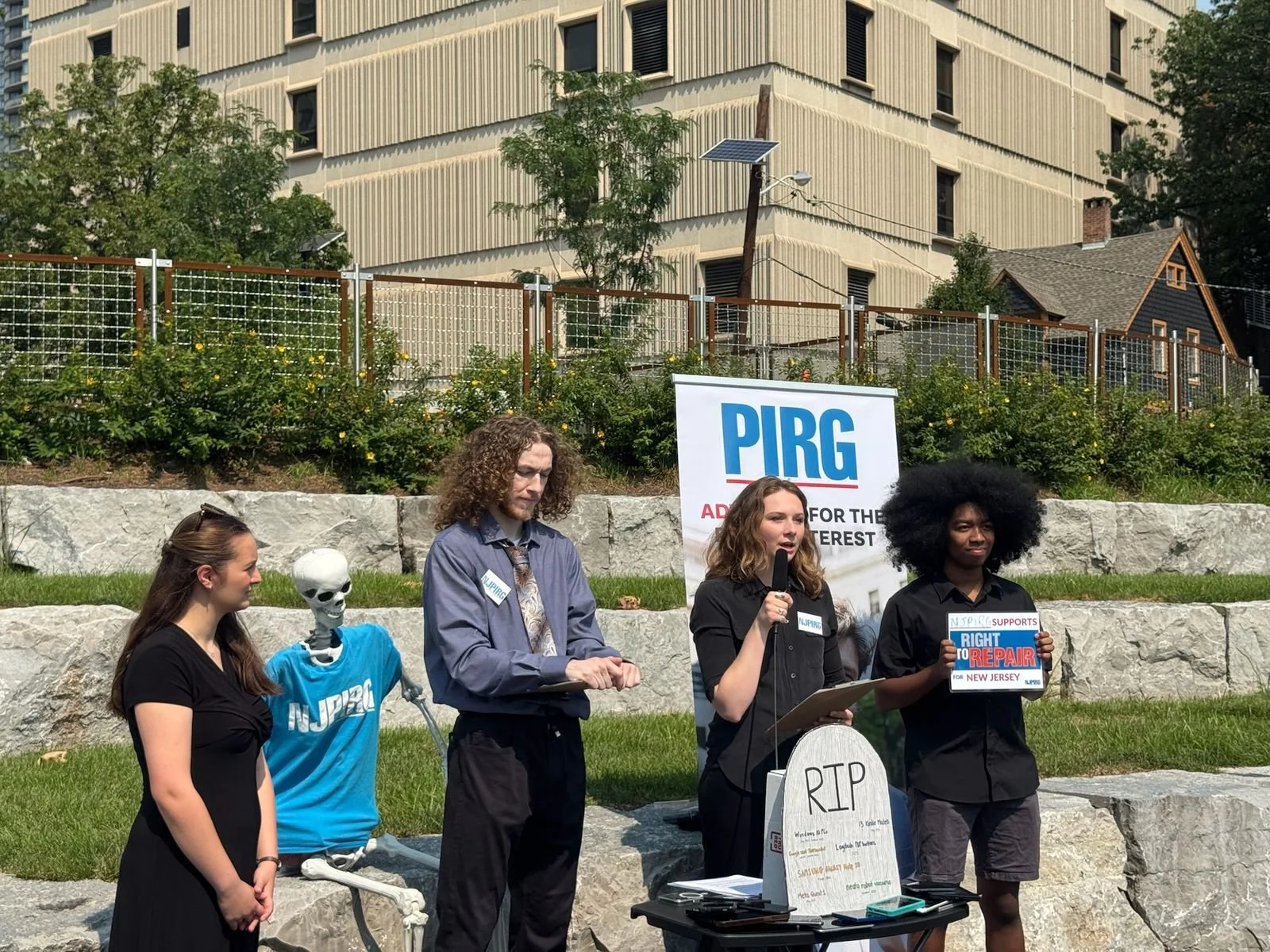
Meghan Smith (second from right), PIRG’s New Economy Associate Organizing Director, joins the New Brunswick, N.J., canvass office to host an "e-waste graveyard" press event. To the left of Meghan is Xander Kimmick, a returning summer canvasser from summer 2025 who became an assistant director in New Brunswick for his second summer canvass. Credit: Staff
Boosting support for wildlife crossings
Canvassers spent the summer educating the public and building support for wildlife crossings, the overpasses and underpasses that let animals cross highways safely and cut down on collisions with drivers. In a follow-up meeting after their petition delivery, a legislative office in Ann Arbor told PIRGIM staff it was interested in developing wildlife crossings legislation for Michigan (and potentially a consumer electronics right to repair bill as well).
Meanwhile, our team in Chapel Hill met with U.S. Sen. Thom Tillis’ office about reauthorizing federal funding for crossings.
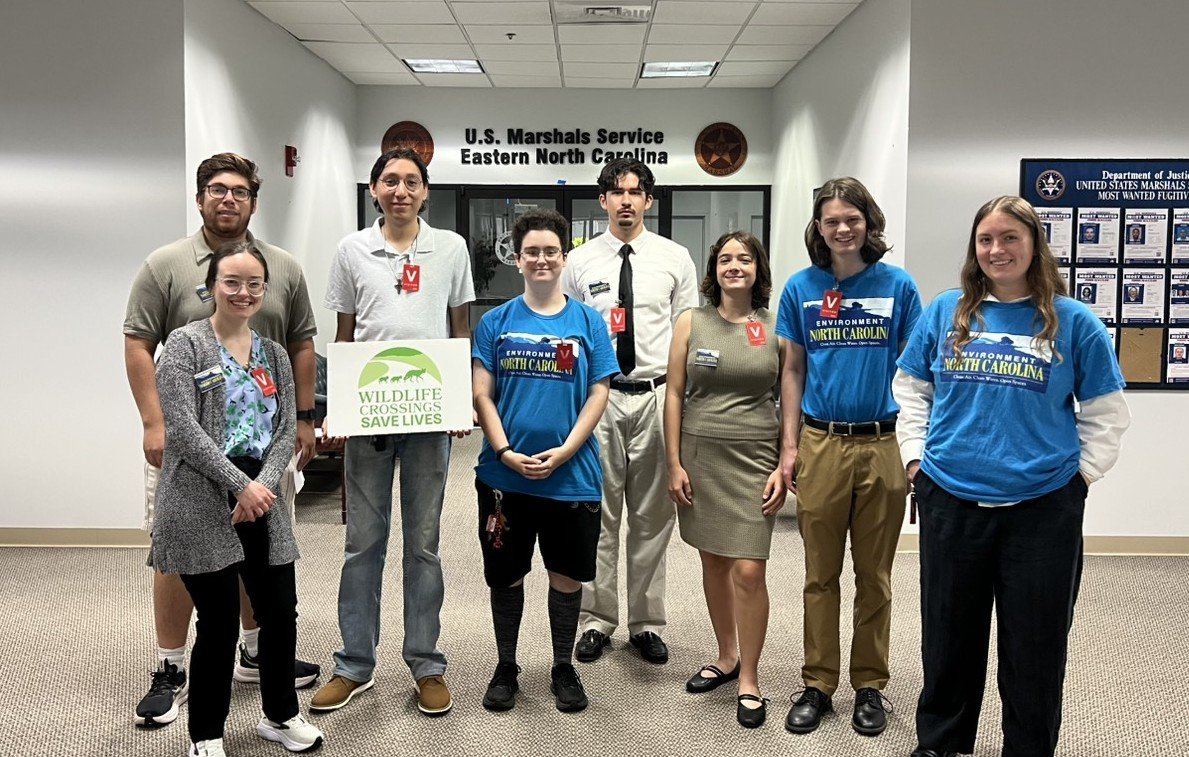
The Chapel Hill, N.C., office meeting with Sen. Thom Tillis' office to discuss wildlife crossings. Credit: Staff
Their work is paying off. On July 7, the North Carolina legislature approved millions of dollars in recurring funding to design and build wildlife crossings, after Environment North Carolina staff and NCPIRG students gathered and delivered more than 3,500 petition signatures.
Tracking plastic pollution
In May, more than 1,000 volunteers participated in a search for plastic pellets, often called nurdles, that get melted down to make nearly every plastic product. The second annual International Plastic Pellet Count, organized by Environment America Research & Policy Center and U.S. PIRG Education Fund, covered 249 sites across 31 states, the District of Columbia and six countries. Volunteers found nearly 1.1 million pellets across more than half the sites they surveyed. Wildlife including fish, birds and turtles often mistake pellets for food, and the pellets can absorb toxic chemicals such as DDT, PCBs and mercury.
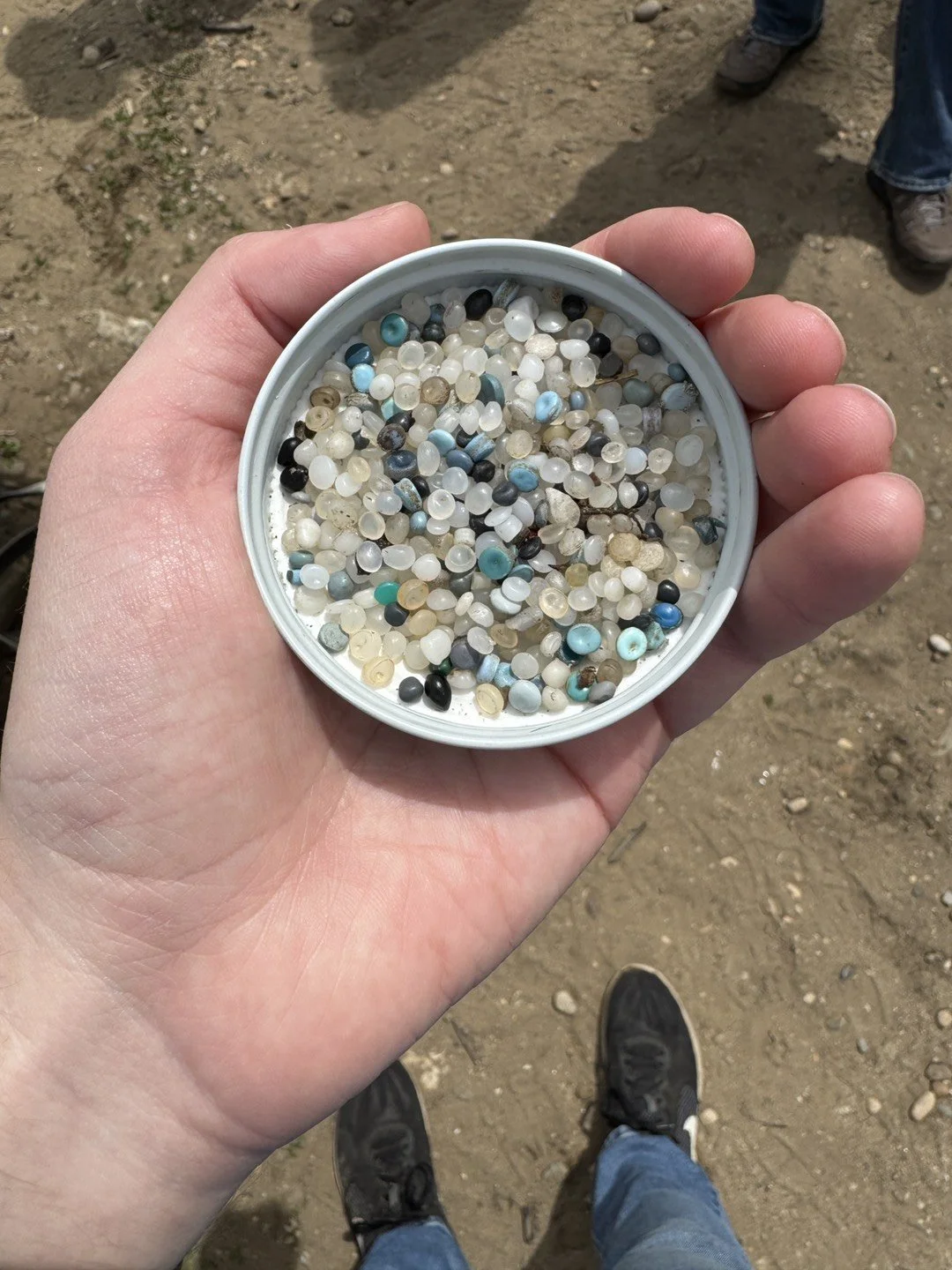
Pellets found during the International Plastic Pellet Count. Credit: Staff
Earlier in the summer, Illinois lawmakers passed HB4418, which defines preproduction plastic pellets as a pollutant and gives the Illinois EPA authority to control them. Illinois would be the first Great Lakes state to directly address this source of pollution waste. Environment Illinois Associate Director Emily Kowalski testified in support of the bill in a Senate committee hearing and released a report showing microplastics were found in 100% of the waters tested around the state. Chicago Field Manager Vi McMahon spoke to the media on the importance of addressing this type of pollution at the report release.
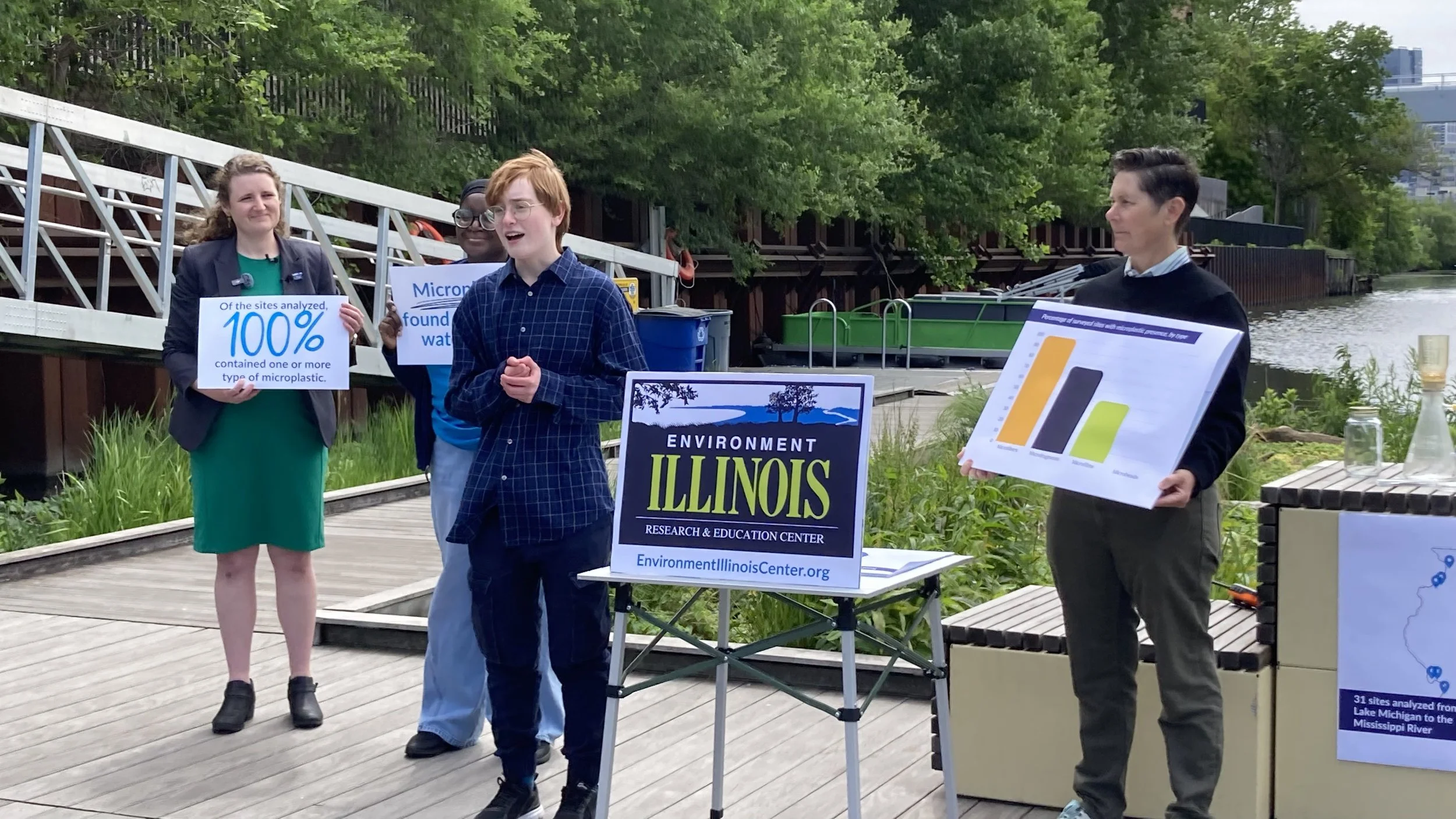
The Environment Illinois team releases their findings on microplastics in local waterways. Credit: Staff
Making food packaging safer
Canvassers, meanwhile, spent the summer talking about the dangers of the plastic packaging on our food. In California and Colorado, teams knocked on doors to talk about phthalates and bisphenols, chemicals used to make plastic flexible or to line the inside of metal cans. Both can interfere with the hormones that regulate metabolism, sleep, mood and fertility, and researchers have raised particular concern about their effects on children. California legislators were considering a bill called the Safer Food Packaging Act, which would eliminate the intentional use of both in food packaging sold in the state. In Colorado, CoPIRG is building a coalition in hopes of getting lawmakers to introduce a similar bill. Canvassers gathered petition signatures, made calls and met with lawmakers, including Colorado Sen. James Coleman.
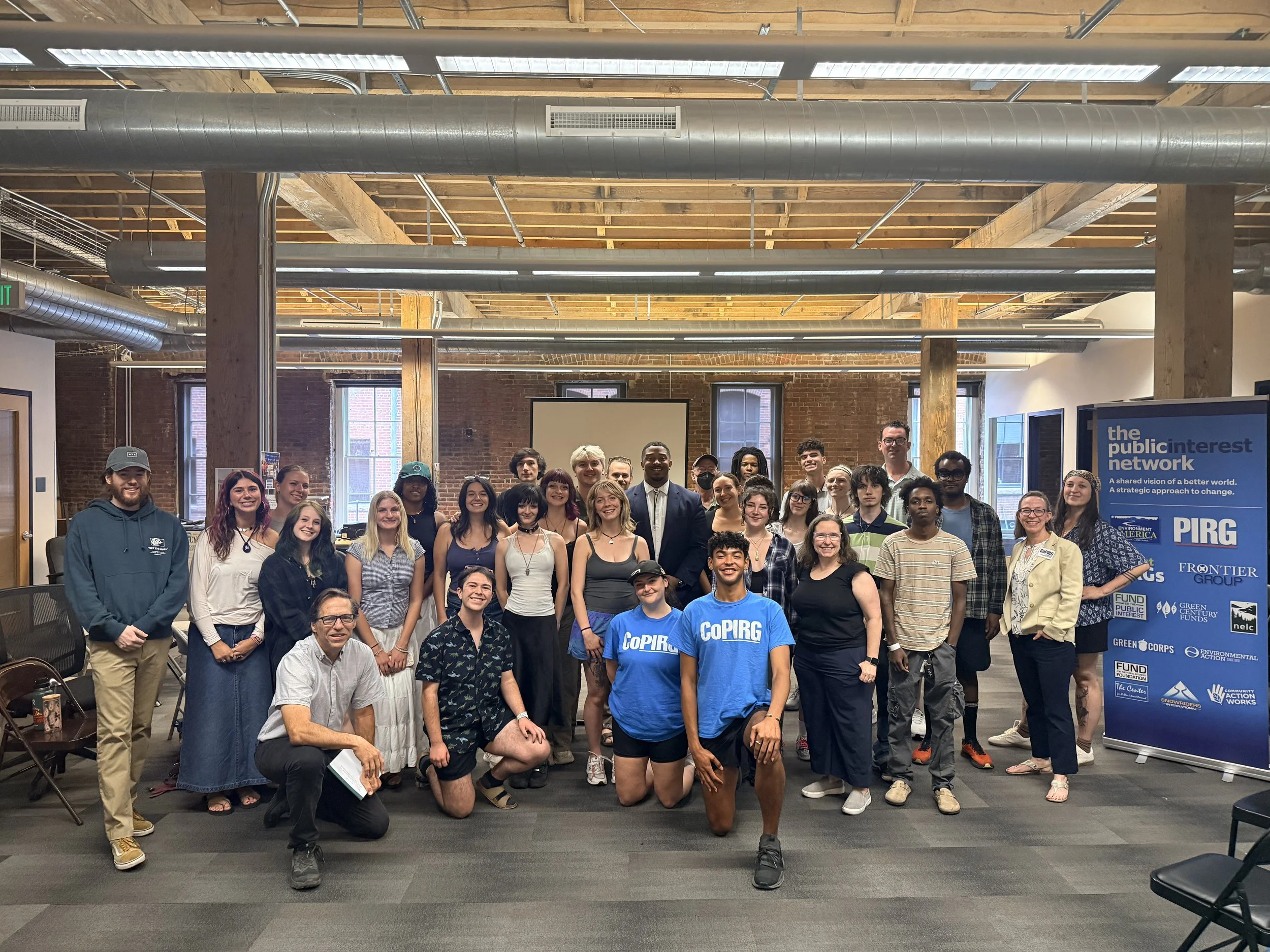
Directors Greg Orr, Diana Price and Emma Waldhoff and their CoPIRG summer canvassers meet with Sen. James Coleman. Also pictured are The Public Interest Network staff Kirsten Schatz, Francis Olsson, Eddie Edmunds, Henry Stiles, and Len Montgomery. Credit: Staff
Standing up for the places we love
Canvassers stood up for public lands and special places in Michigan, Washington, Virginia and Illinois, among others. In Michigan, the Ann Arbor office held nearly 6,000 conversations with residents and helped circulate a statewide parks survey that has drawn more than 200 responses. In Washington, canvassers built support for the America the Beautiful Act, which would restore federal park funding. In Virginia, they advocated for the Virginia Great Outdoors Act, which would fund land conservation, historic sites and a wildlife corridors grant program.
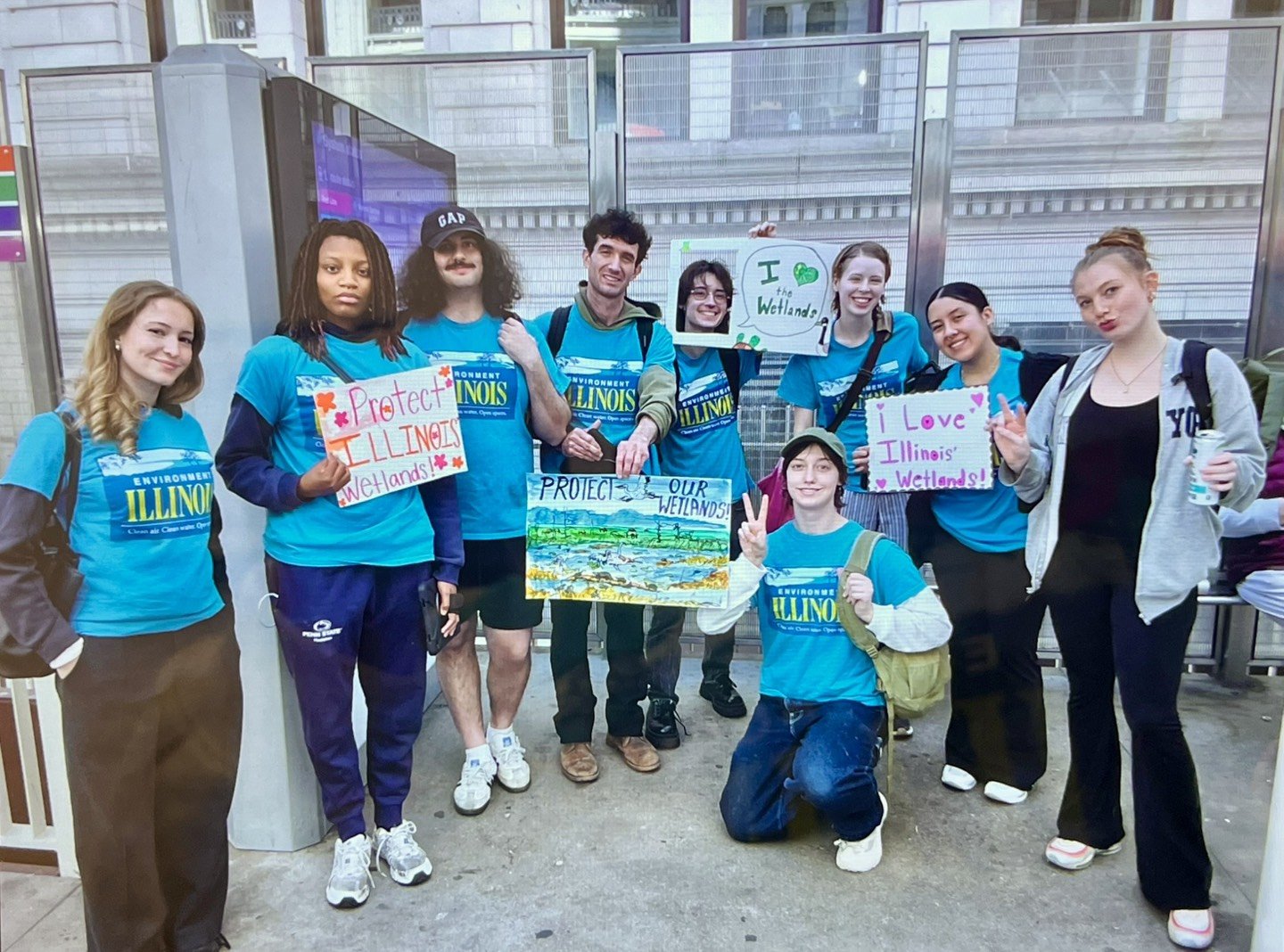
Environment Illinois canvassing to protect Illinois’ remaining wetlands. Credit: Staff
In California, 30 canvassers from Santa Cruz and Berkeley traveled to Sacramento to deliver 43,306 petition signatures to the governor and the Fish and Game Commission calling for expanded marine protections, along with more than 1,000 photo petitions from Californians.
On Aug. 18, Minnesota Gov. Tim Walz signed an executive order preventing mining in the Rainy River Headwaters Watershed (RRHW), near the Boundary Waters Canoe Area Wilderness. Environment Minnesota canvassers spent the summer petitioning for state-level protections for the area, which Congress had stripped of a federal 20-year mining ban in April. Lida King, a Minnesota native herself, had been directing in Minnesota for just over a year for this campaign, and is now running our Washington, D.C., canvass office this winter.
Showing up locally
Some canvass teams volunteered in their own communities. A team in Santa Barbara, led by directors Caleb Weiss and Zyanya Figueroa, volunteered on a coastal restoration project at Coal Oil Point Reserve, and canvassers in Eugene, Oregon, gathered small-business sign-ons for the “Save the Bees” campaign at a neighborhood farmers market.
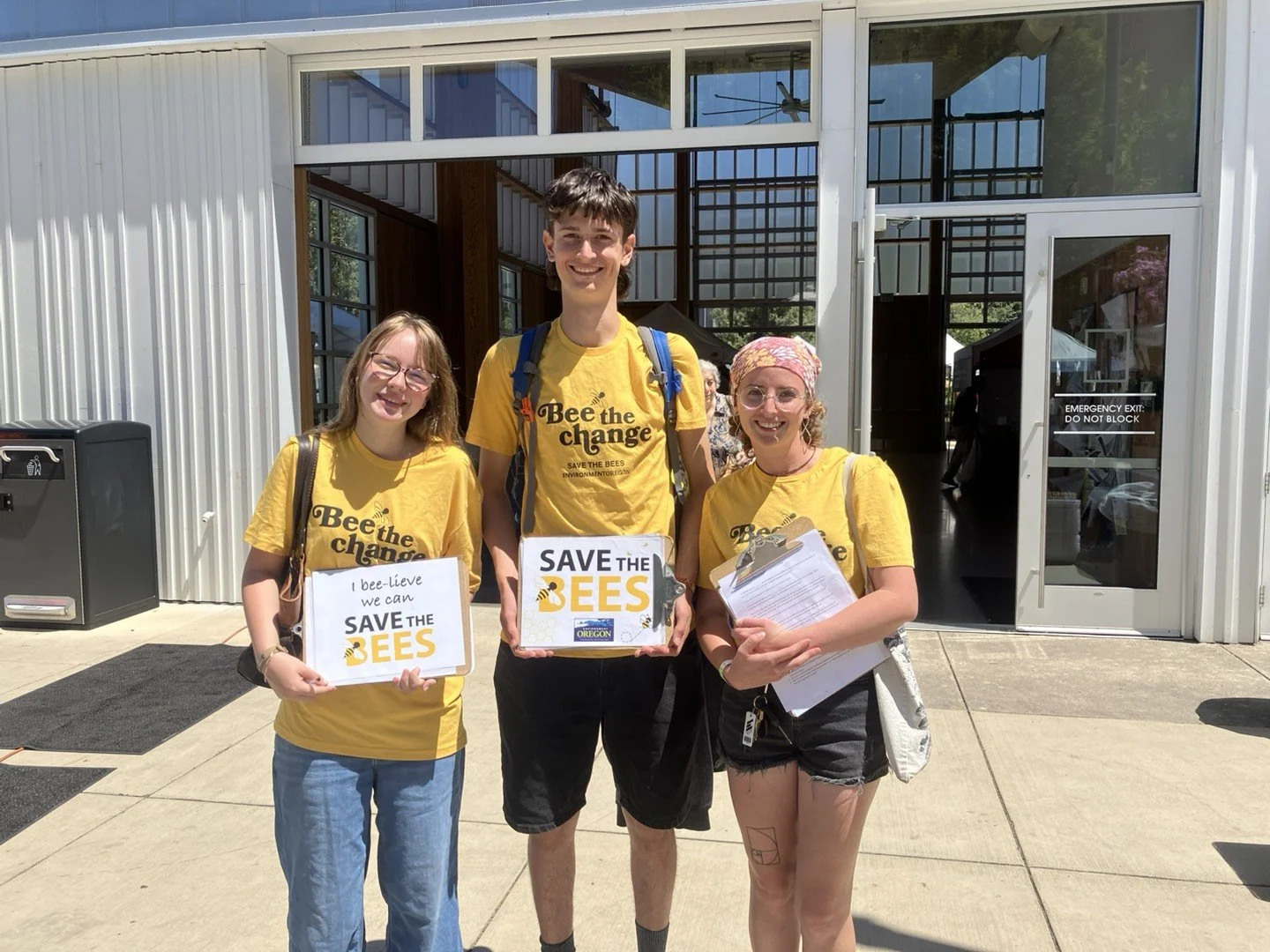
Assistant Director Kayla Christensen and Canvassers from the Eugene, Ore., office collecting small business sign-ons. Credit: Staff
In New Brunswick, a man who canvassed for PIRG in the 1980s came to speak with this year’s team after organizer Liora Petter-Lipstein knocked on his door a few days earlier. U.S. Rep. Frank Pallone also visited the office to talk about his environmental work.
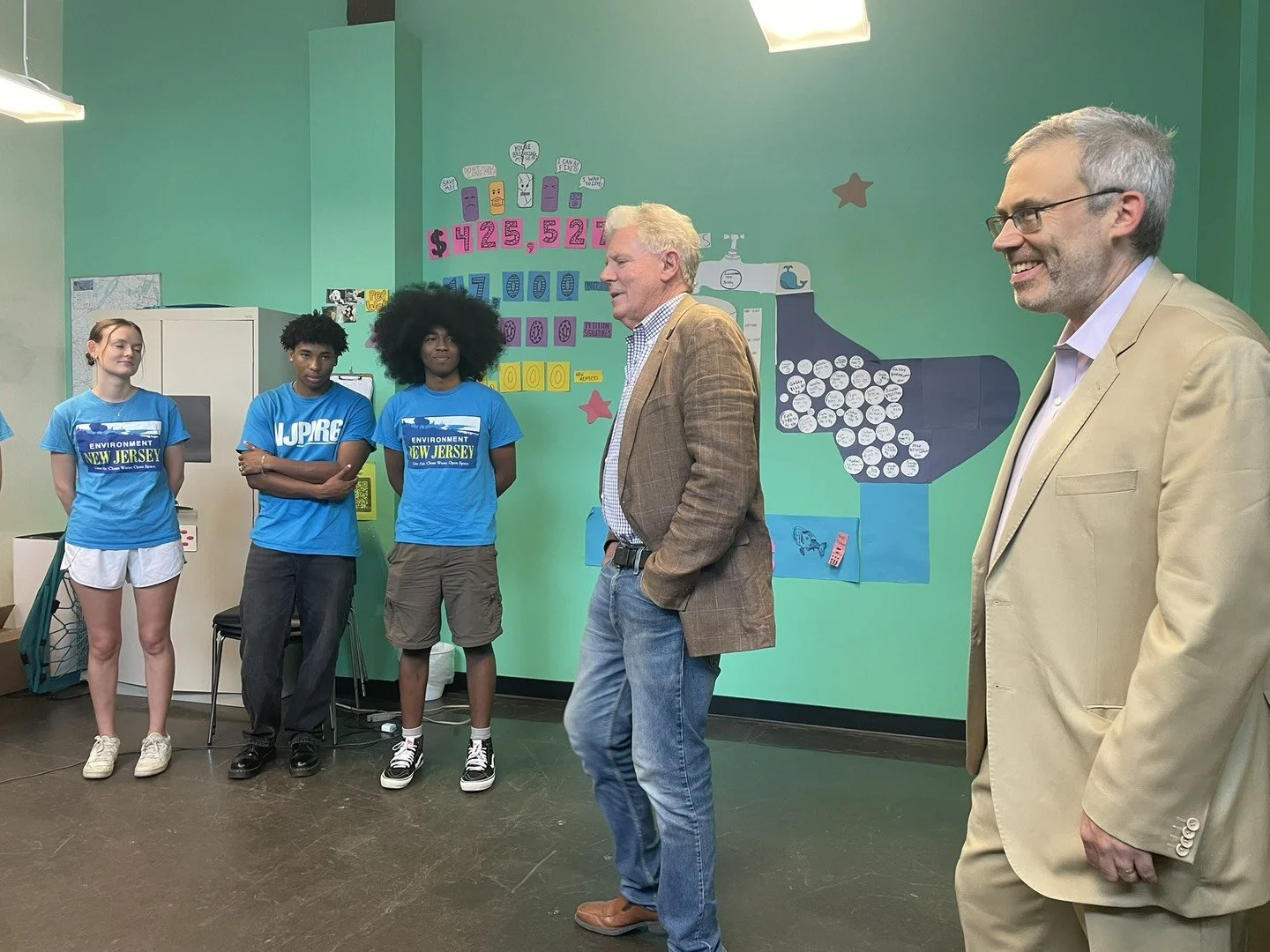
Congressman Frank Pallone (middle) speaks to the New Brunswick office. Credit: Staff