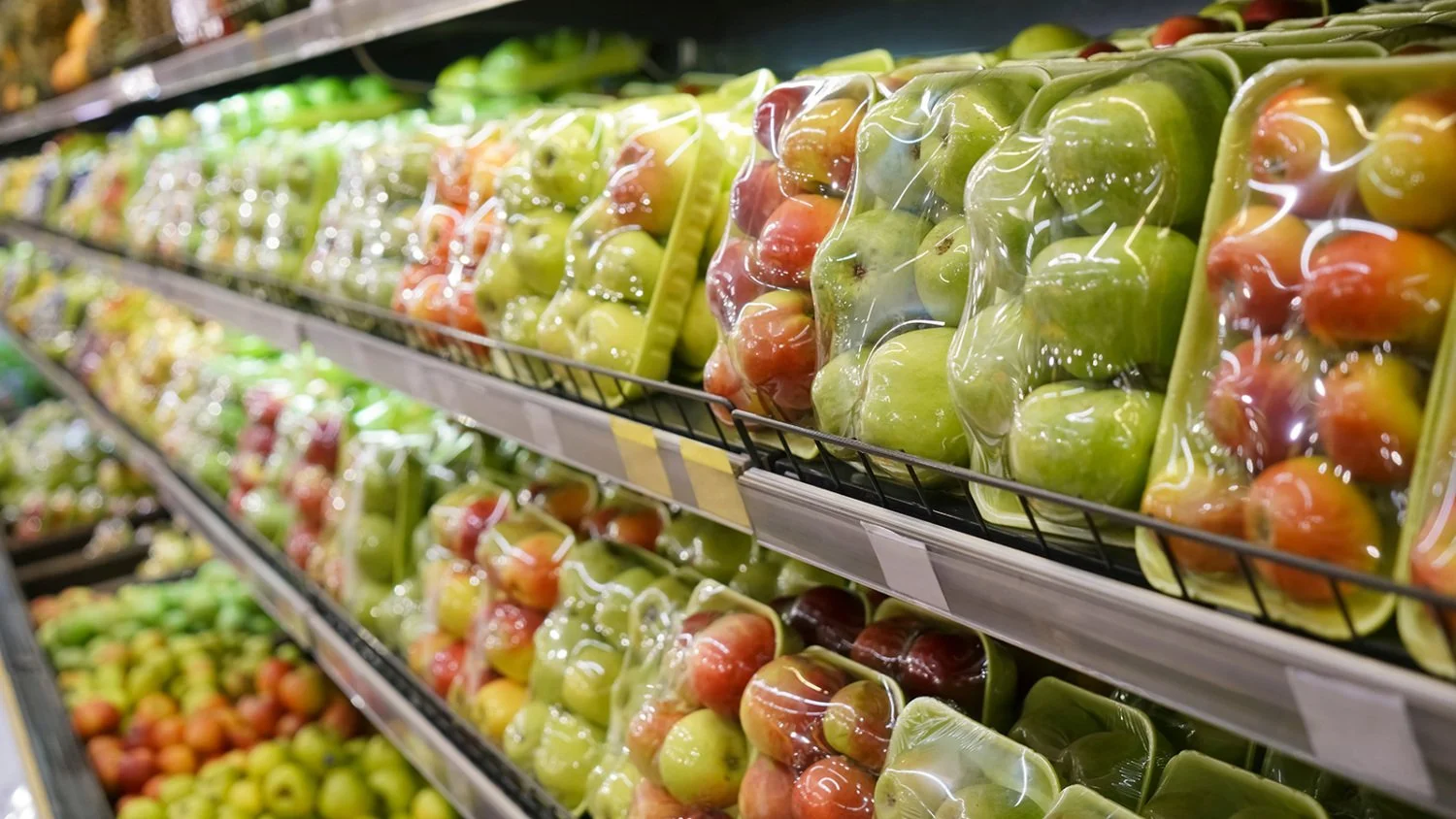
Apples packaged in plastic at a grocery store. Credit: Maradon_333 via Shutterstock.com
Nobody looks for a label reading “Now with added phthalates!” on the bottle of their favorite iced tea.
Nor does anyone seek out “High in bisphenols!” on the can of their preferred chicken soup.
Yet if many of your favorite foods and beverages come in a plastic bottle, a plastic-lined can or a plastic-lined box — and let’s face it, almost every food product comes shrouded in plastic these days — you’re probably getting a dose of phthalates and bisphenols along with your meals, beverages and snacks.
A recent study found phthalates in everything from iced tea to canned beans, from ketchup to chocolate milk, from chicken nuggets to baby food.
The chemicals in our food packaging
Phthalates are “plasticizers” — synthetic chemicals used to make plastic softer, more pliable and more durable. Bisphenols (best known as BPA or its close cousins, BPS and BPF) do the opposite job — they help make plastic hard, or provide the thin lining inside a metal can so it doesn’t corrode.
Both classes of chemicals show up constantly in the food system, in bottles, cans, plastic wrap, to-go containers and even the tubes, belts and gloves used on factory floors. And both are linked to health problems that we’re only beginning to fully understand.
Why these chemicals are a problem
Phthalates and bisphenols are endocrine disruptors. That means they interfere with the hormones that regulate metabolism, blood pressure, blood sugar, sleep, mood and fertility — the systems that keep our bodies running the way they’re supposed to. Bisphenols in particular mimic the hormone estrogen, which affects body weight, cardiovascular health and cancer progression. Phthalates have been linked to increased risks of breast and other hormone-related cancers.
The risks for children are even higher. Their brains, organs and reproductive systems are still developing, and phthalates can reach a child’s body through the womb or breast milk well before their first bite of solid food. Scientists have raised alarms over the hormonal disruptions these chemicals can trigger in how children learn, think and behave — concerns serious enough that the American Academy of Pediatrics called on federal regulators back in 2018 to retest the safety of these chemicals. Some researchers have gone further, calling for an outright ban on their use in anything that touches our food.
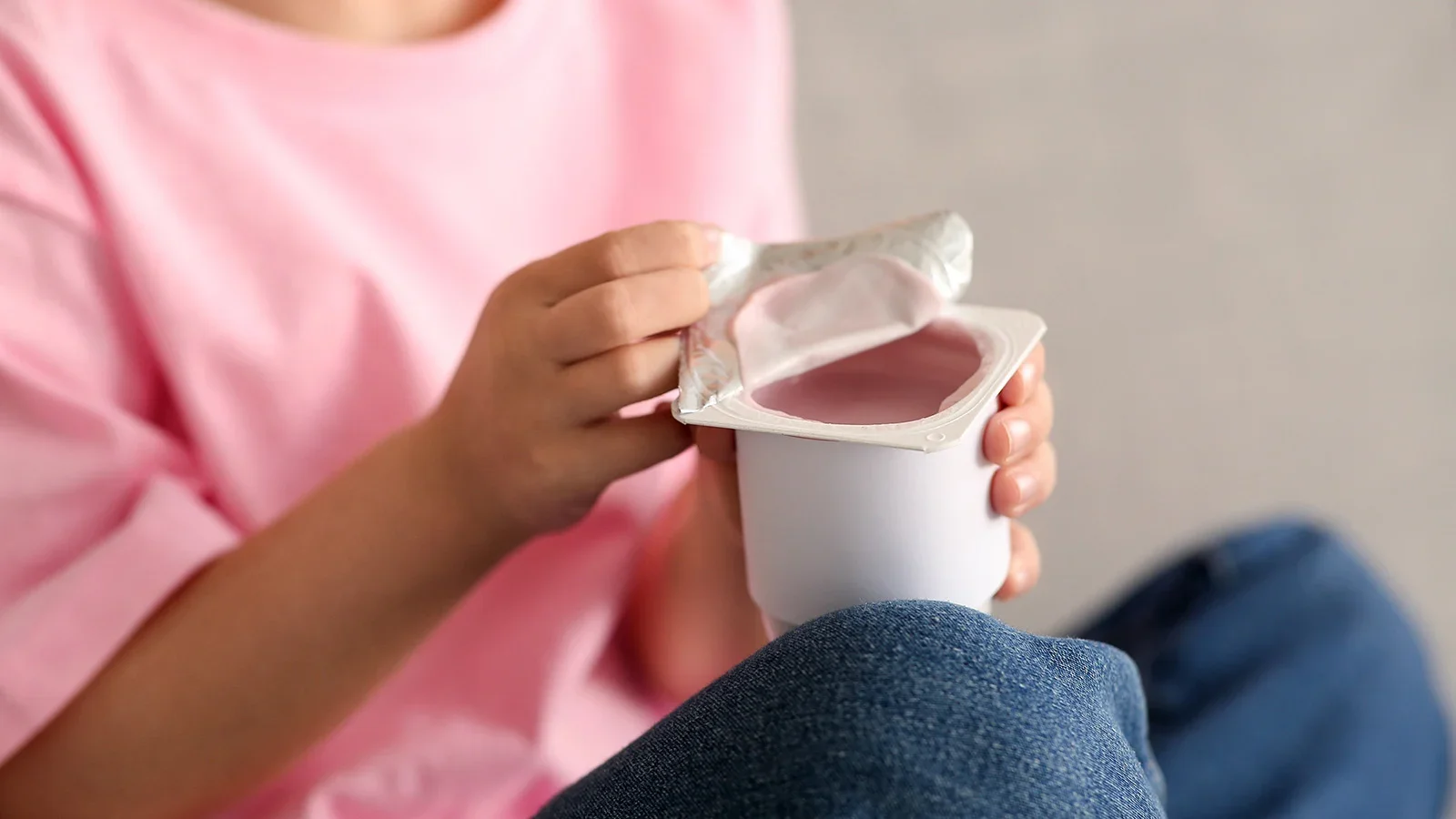
Phthalates and bisphenols are found in many food containers and packaging and may impact children’s brain development, learning and behavior. Credit: Pixel Shot via Shutterstock.com
Why companies keep using them
Companies use these chemicals because they work. Phthalates make packaging flexible; bisphenols keep cans from rusting and keep microwave trays from melting. Both are cheap and effective.
Some companies have responded to consumer pressure, however, by phasing chemicals out. Nestlé, for instance, has a policy against adding phthalates to its packaging. But even in plants that no longer add phthalates directly, the plasticizers used in equipment on the factory floor still make their way into the food that passes through it. And swapping out BPA doesn’t necessarily solve the problem. A product proudly labeled “BPA free” may simply contain BPS or BPF, with the same endocrine-disrupting effects.
For decades, we have allowed companies to expose people to chemicals that were new to this world but never properly tested. Knowing what we know now about these chemicals, their presence in the food we eat, and the harms they cause to our health and well-being, it’s clear that this large-scale experiment was a mistake. Let’s end it.
This is fixable
Right now, California state legislators are considering a bill called the Safer Food Packaging Act (AB 1148), authored by Assemblymember LaShae Sharp-Collins. The bill would eliminate the intentional use of phthalates and bisphenols in the packaging of food sold in the state and empower regulators to set standards limiting how much of these chemicals can be present in food through incidental use, as in factory equipment.
CALPIRG is working with health professionals, scientists and parents to make the case that families deserve food that’s safe to eat, packaged in materials that won’t threaten their health.
In Colorado, CoPIRG is launching a campaign to demonstrate public support for eliminating phthalates and bisphenols from food packaging. In the past few years, CoPIRG has helped ban PFAS from firefighting foam, carpets and rugs, and consumer goods like cleaning products, cookware, dental floss, menstruation products, ski wax and textiles. Now, CoPIRG is mobilizing a coalition in hopes of getting lawmakers to introduce a bill.

CoPIRG summer canvassers meet with state Sen. James Coleman. Credit: Staff
That’s why this summer, our canvassers are knocking on doors across California and Colorado, talking about the chemicals in food packaging and pushing for safer standards. We’re gathering petition signatures, making calls and meeting with lawmakers to urge them to pass the Safer Food Packaging Act.
With enough public pressure, we can get toxic chemicals out of the packaging that touches our food for good.