
A giant Chilean mining conglomerate wants to mine near the Boundary Waters. The Fund is working with Environment Minnesota to permanently protect this wild and popular place.

Credit: Dave Freeman
Beloved by Minnesotans and visitors from around the world, the Boundary Waters Canoe Area Wilderness, located in the Superior National Forest, is the nation’s most visited wilderness area.
There is something for everyone in the Boundary Waters.
People from all over the world travel there to canoe, kayak, and, if they’re lucky, catch a glimpse of wildlife on one of the area’s 1,200 boating routes. Outdoor sportsmen and women travel there to fish and hunt. Adventurers can hike, backpack and camp on the area’s trails and nearly 2,000 campsites. Visitors may even see the northern lights undulating above the tree tops.
What can you see in the Boundary Waters
Despite more than 150,000 annual visitors, the Boundary Waters is teeming with wildlife. The area’s countless lakes, ponds, fens and cliffs are home to a diverse variety of species.
Walking among the forest will take you beneath towering old-growth pines, black spruce and white cedar trees. You might even stumble upon a wild blueberry or raspberry bush.
You may catch a glimpse (from a safe distance) of moose, fox, beavers and even black bears. While walking along the lakes and streams you can see soaring bald eagles, osprey, loons or the elusive great gray owl, the largest owl species in North America.
Meanwhile, trout, bass and pike dart about in the Boundary Water’s many rivers and streams.
The area is also home to three threatened species, the gray wolf, Canada lynx and northern long-eared bat.
Copper mining: A toxic threat to this special place
Unfortunately, the Boundary Waters, and parts of the Superior National Forest, sit above deposits of iron and sulfide ores, copper, nickel and other associated metals.
Twin Metals, a subsidiary of the giant Chilean mining conglomerate Antofagasta, has long pushed to build an underground mine for copper, nickel and precious metals near Ely, just south of the Boundary Waters. Pollution from this mine, if it is ever built, would likely contaminate the water that runs into the Boundary Waters’ interconnected waterways.
Sulfide mineral mining can produce a sulfuric acid byproduct created when the minerals are exposed to air or water. This acid can drain outside the mine, decreasing water pH and leeching harmful metals like lead and mercury into waterways, causing sweeping damage downstream.
The acid runoff from sulfide copper mining can significantly degrade water quality and harm the fish and animals that live in, or rely on, that water, which in turn causes it to build up in local food chains. But the contamination doesn’t stop there, the runoff can also leak into the soil.
We don’t need to mine in the Boundary Waters
Minnesotans know the Boundary Waters is a popular recreational area and vital wildlife habitat that is too special to destroy for copper.
Simply put, we don’t need to be mining copper upstream of a beloved wilderness, especially when copper can be recycled over and over again without losing its quality. We should be diverting copper from landfills and setting up better systems to reuse and recycle the copper from our e-waste and other sources.
There’s no reason to rob future generations of the opportunity to canoe, camp and sleep beneath the stars.
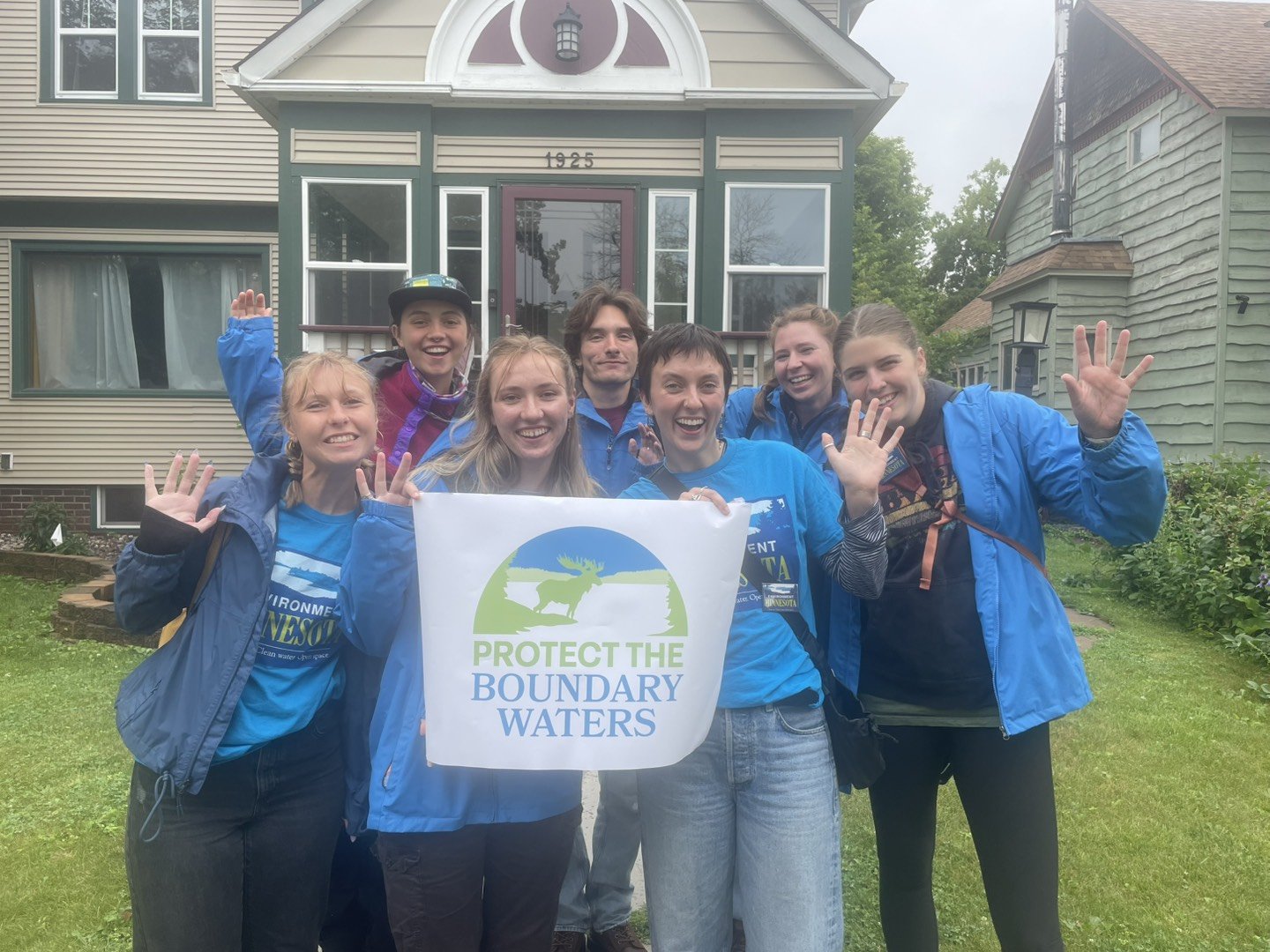
Environment Minnesota canvassers out building support for the Boundary Waters. Credit: Staff.
How you can help protect the Boundary Waters Canoe Area Wilderness
To ensure that they stand up for our natural heritage, our leaders, on both the state and federal level, need to hear from people across Minnesota.
That’s why we’ll continue knocking on doors and having conservations in the community, getting people like you involved. Together, we’ll be sending petitions, making phone calls and meeting with lawmakers in both Saint Paul and Washington, D.C.
If they hear from enough of us, they can take action to permanently protect the federal and state land surrounding the Boundary Waters wilderness, ensuring future generations of Minnesotans, and visitors from around the globe, have a chance to paddle through these pristine waters.
