
Washington Gas and BGE’s gas pipeline replacement programs are expensive, ineffective, and lock us into fossil fuels. The Fund is partnering with Maryland PIRG to reform gas pipeline spending for safer, cleaner energy.
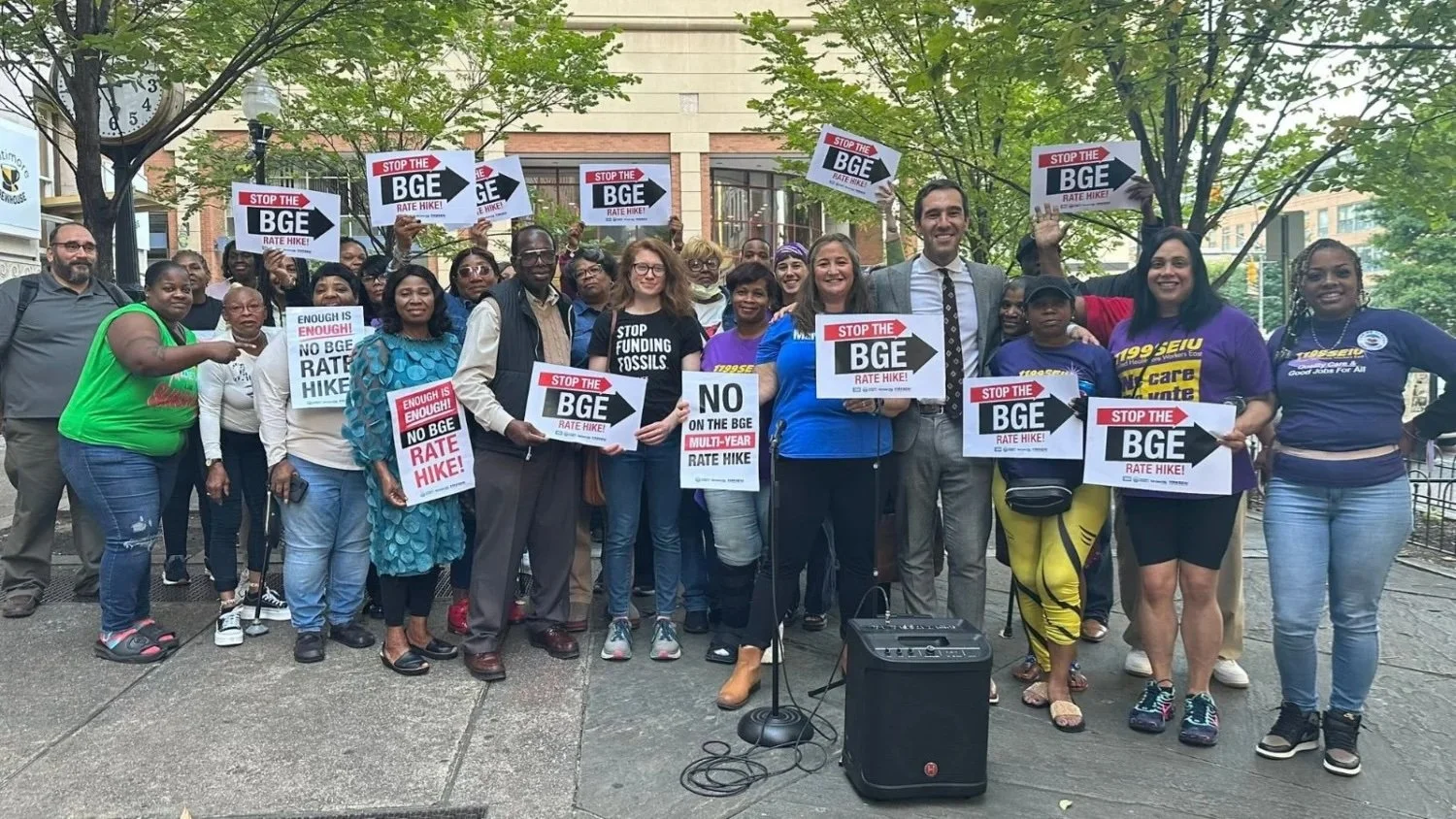
Coalition and community members speak out against BGE's proposed multi-year rate hike at final public hearing. Credit: Staff.
Over the past decade, Maryland gas utilities have spent over one billion dollars to replace gas pipes and equipment. Sounds like a good thing, right? We need to keep pipes maintained to keep people safe.
Unfortunately a lot of the spending doesn’t address the underlying safety concerns utility companies are using to justify the program. Worse, these heavy investments in gas infrastructure will make it harder to invest in cleaner, more efficient energy and heating technologies.
The result is a lose-lose situation for many Maryland consumers. We’re not much safer than we were before, and some gas delivery costs have skyrocketed.
What’s going wrong with gas pipeline safety spending?
The gas utilities’ strategy sounds reasonable: To keep people safe we need to replace old iron pipes with new plastic ones. But there are three big problems with their approach:
First, rather than considering more cost-effective methods such as relining to fix old iron pipes, utility companies are completely replacing them.
Second, instead of focusing on specific sections of old iron pipe that pose safety risks, utility companies including WGL and BGE are doing sweeping replacements of entire gas systems.
Lastly, the companies are upgrading their systems for “high volume” gas delivery, which requires the replacement of equipment including new plastic pipes and regulators. This adds a lot of expense and disruption as they dig up entire neighborhoods, sidewalks and yards to install the new system.
These strategies might make sense if we want to double down on burning natural gas for the foreseeable future. But they ignore all the cleaner, cheaper and more efficient ways we could be heating and cooling our homes. And because of all the extra work and significant expenses, this approach may actually be slowing the work to address the riskiest pipes.
What does all this mean for Maryland consumers?
We’ll be paying for a long time. When gas utilities install new pipes, customers pay it back over the full projected lifetime of the equipment, like a mortgage or high interest credit card, with compounding interest. It will drive up our bills for decades to come.
We’re paying too much. Gas utilities have already spent more than $2 billion on pipeline replacement and are projected to spend more than $7 billion more in the coming decades. When accounting for the profits gas utilities make or will make off this spending, the program could cost customers more than $30 billion.
We’re not getting cleaner, safer energy. WGL and BGE are essentially asking customers to commit to paying for gas pipes for decades to come, making it much harder to transition to safer, cleaner energy to heat our homes.
Utility companies can put safety first
Instead of prioritizing costly expansion, our gas utilities need to put safety first. They can do that by abandoning one-size-fits-all replacement approaches in favor of safe strategies that also get consumers the most bang for their buck.
Utility companies should employ advanced repair techniques, like refurbishing pipes with internal liners that eliminate leaks and extend the life of the iron pipe for decades. And gas utilities should do more to partner with their electric division or local electric utility to help customers who want to, to electrify their homes and stop using gas altogether—something BGE is well positioned to do as both a gas and electric utility. These approaches all minimize tearing up and resurfacing streets, which is one of the biggest costs and inconveniences of pipe replacement.
Alternatives to replacement almost always take less time and cost less, all while improving safety just as much, if not more. And critically, these approaches facilitate, rather than frustrate, Maryland’s transition to safer, cleaner energy to heat our homes.

Maryland PIRG Senior Advisor Emily Scarr at a press event highlight the problems with BGE’s
What can we do?
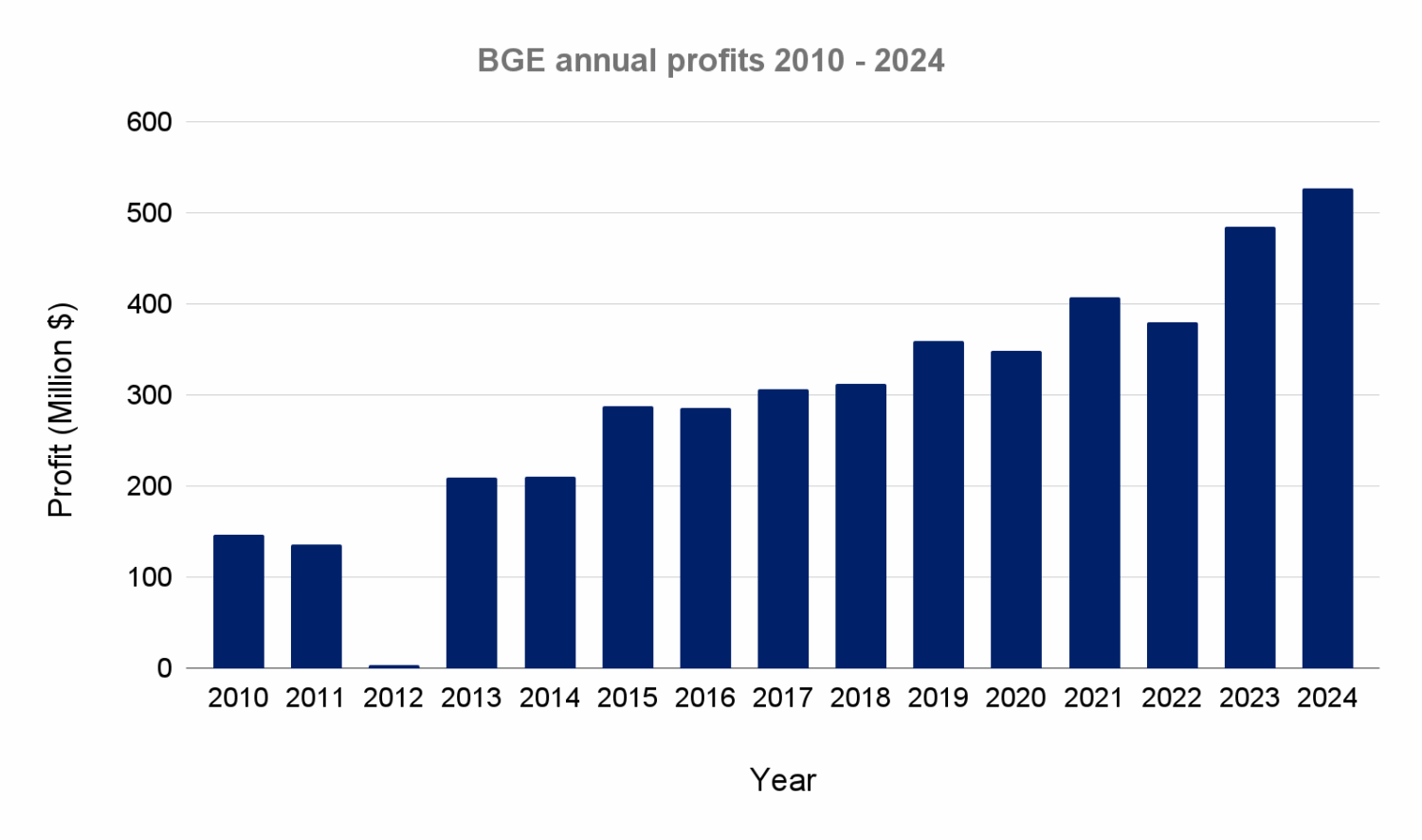
The utility companies are unlikely to change their plans on their own. Gas pipeline replacements have been very, very profitable, helping increase BGE’s annual profits by more than 293% from $147 million in 2010 to $578 million in 2025.
That’s why we’re calling on the Public Service Commission (PSC) to use its power to protect ratepayers. Maryland PIRG led the campaign to pass the Ratepayer Protection Act, which Gov. Wes Moore signed into law in 2025. The law went into effect June 1, 2025, so now PSC has the tools it needs to require WGL and BGE to make changes to their gas pipeline programs.
Now, we need to continue to build public support to ensure the PSC uses its full authority to rein in wasteful spending by WGL and BGE and limit future rate hikes. That’s why we’re organizing local leaders, organizations, and customers like you to urge PSC regulators to direct the utility to address pressing safety risks while also taking meaningful action to transition to clean energy homes.
Maryland PIRG has led successful statewide efforts to update and improve the state’s energy efficiency program, streamline rooftop solar permitting, and push back on anti-consumer ratemaking policies.
If we win, not only will we halt unnecessary rate hikes for gas customers across Maryland, but we will also help speed up the transition towards clean energy, thus reducing our state’s reliance on planet-warming fossil fuels.
