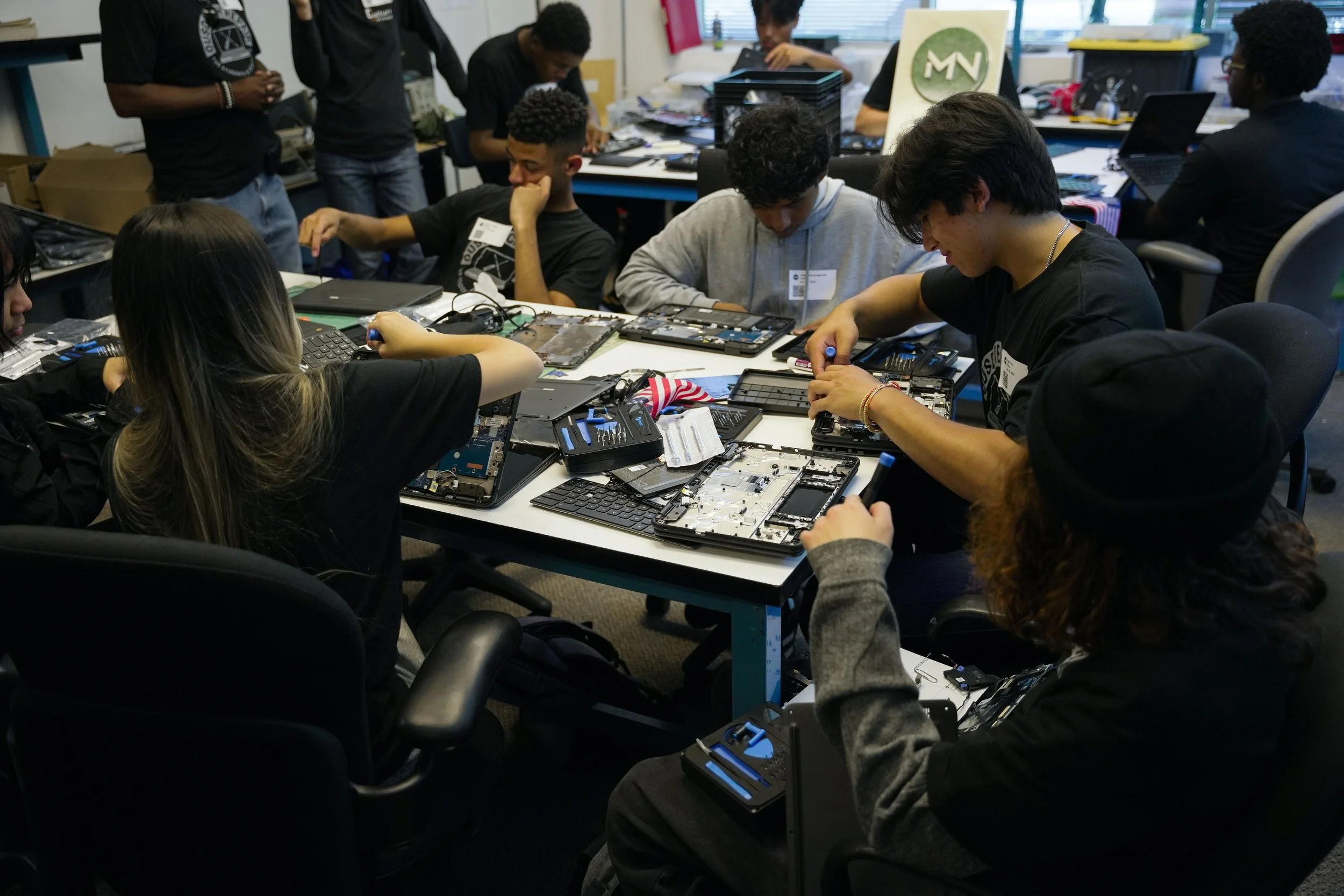
A community repair event. Credit: Ben Lohrentz
Not long ago, if your toaster stopped working, you popped it open, found the problem and repaired it, or took it to a shop down the street that could. Appliances came with manuals. Spare parts were easy to find. Companies competed to build things that lasted. These days, it’s not as simple or easy.
That’s because manufacturers have erected barriers to repair that force you to only use their “authorized” repair services or, worse, buy a new product because you can’t fix your old one.
The result is a mountain of stuff that gets thrown out — not because it is broken beyond repair, but because fixing it was made impossible.
The waste is enormous, and it’s toxic
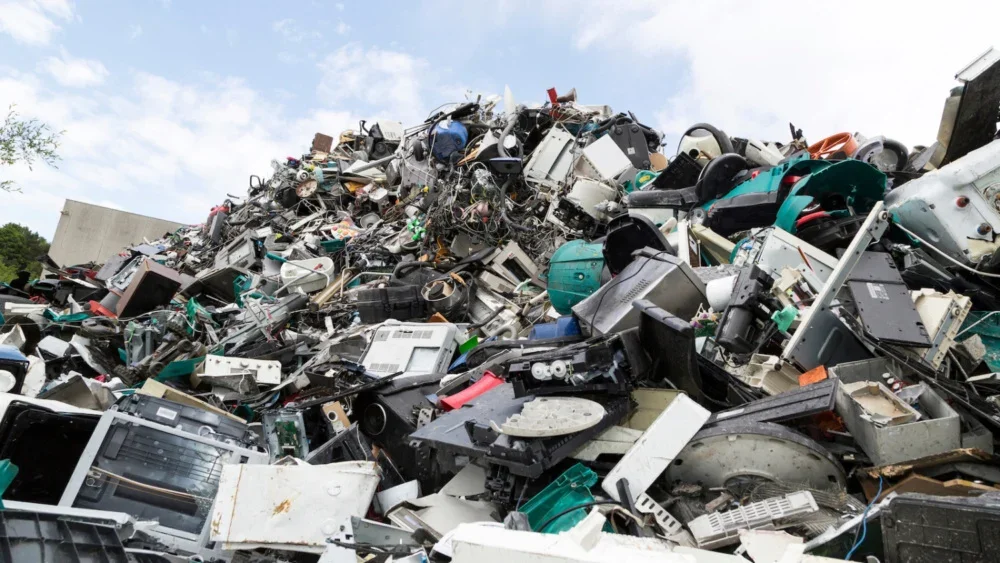
Electronic waste and garbage for recycling. Credit: Morten B via Shutterstock
Electronic waste is now the fastest-growing waste stream on the planet. In the United States alone, we throw away 416,000 cell phones every single day. Add it up across all our devices, and Americans generate 6.9 million tons of e-waste every year.
Most of these tossed electronics get shredded, releasing heavy metals and toxic chemicals into the air, soil and water around processing sites.
And every discarded device represents raw material that had to be dug out of the ground in the first place. Americans buy about 160 million new smartphones a year, a habit that takes 23.7 million tons of raw material to satisfy. Building all of that takes rare earth metals, copper, lithium and cobalt. These are finite resources pulled from the earth and refined at an environmental cost, only to be buried in a landfill after a year or two of use because a battery couldn’t be swapped out.
We are mining the planet to build things we are not allowed to keep.
This is (literally) fixable
Right to Repair is a simple, commonsense fix — if you own something, you should be allowed to fix it, or choose who does.
That means manufacturers should be required to:
Sell the same spare parts they use in their own repairs to consumers and independent repair shops at a fair price
Make repair manuals and service information publicly available
Provide access to the special tools needed to complete a repair
None of that requires a manufacturer to design worse products or give up trade secrets. It just means the rest of us get the same access to parts and information that “authorized” repair centers already have.
There is a growing movement of small repair shops, farmers, tinkerers and DIY enthusiasts who want to be able to fix their stuff and reduce electronic waste — and that coalition has already changed the law in states across the country. Over just the last few years, 10 states have passed Right to Repair legislation — including Texas, California, New York and Kansas. A lot of this is thanks, in part, to PIRG spearheading the campaign and the grassroots support built by the Fund.
As states move forward, it increases pressure on Congress to act. Most recently, Reps. Joe Morelle, Marie Glusenkamp-Perez and Sen. Ben Ray Lujan introduced the Fair Repair Act, which would require manufacturers of nearly all electronics, appliances and farm equipment to provide access to parts, tools and information needed to repair those devices. This legislation is the single biggest lever available right now for keeping devices out of landfills and cutting down how much new material we have to dig up to replace them.

Neighbors come together to fix their broken devices at a laptop fix-a-thon co-hosted by U.S. PIRG Education Fund. Credit: Christian Fiore
What repair actually protects
Every device kept in use instead of thrown away is raw material that doesn’t need to be re-extracted, refined and shipped again. It’s one less phone in the 416,000 we throw out today, and again tomorrow.
Repair also keeps us connected to our stuff and to each other. At community repair events happening around the country, neighbors gather to fix small electronics and tools together, some of them opening up a device for the first time in their lives. Those afternoons build skills and community, while chipping away at a culture that tells us the easiest answer to anything broken is to buy a new one.
A throwaway economy is not inevitable. It is a set of choices that manufacturers made, and one we can undo.
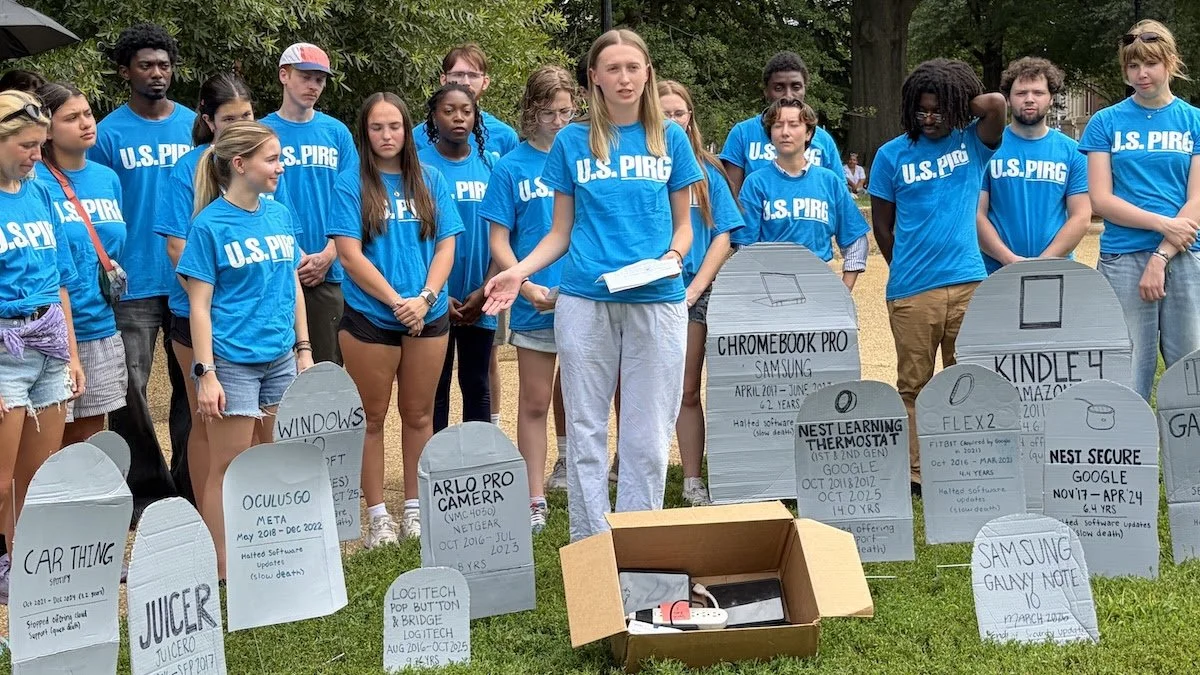
PIRG canvassers host a mock funeral for devices rendered obsolete by software expiration. Credit: Staff
This summer, we’re canvassing in Michigan, New Jersey, Pennsylvania, Maine, North Carolina and Virginia, talking with people about Right to Repair. We’re gathering signatures, making calls and meeting with local lawmakers to build support for Right to Repair, so manufacturers can no longer keep parts, tools and manuals locked away from people who need them.