Wildlife crossings save lives
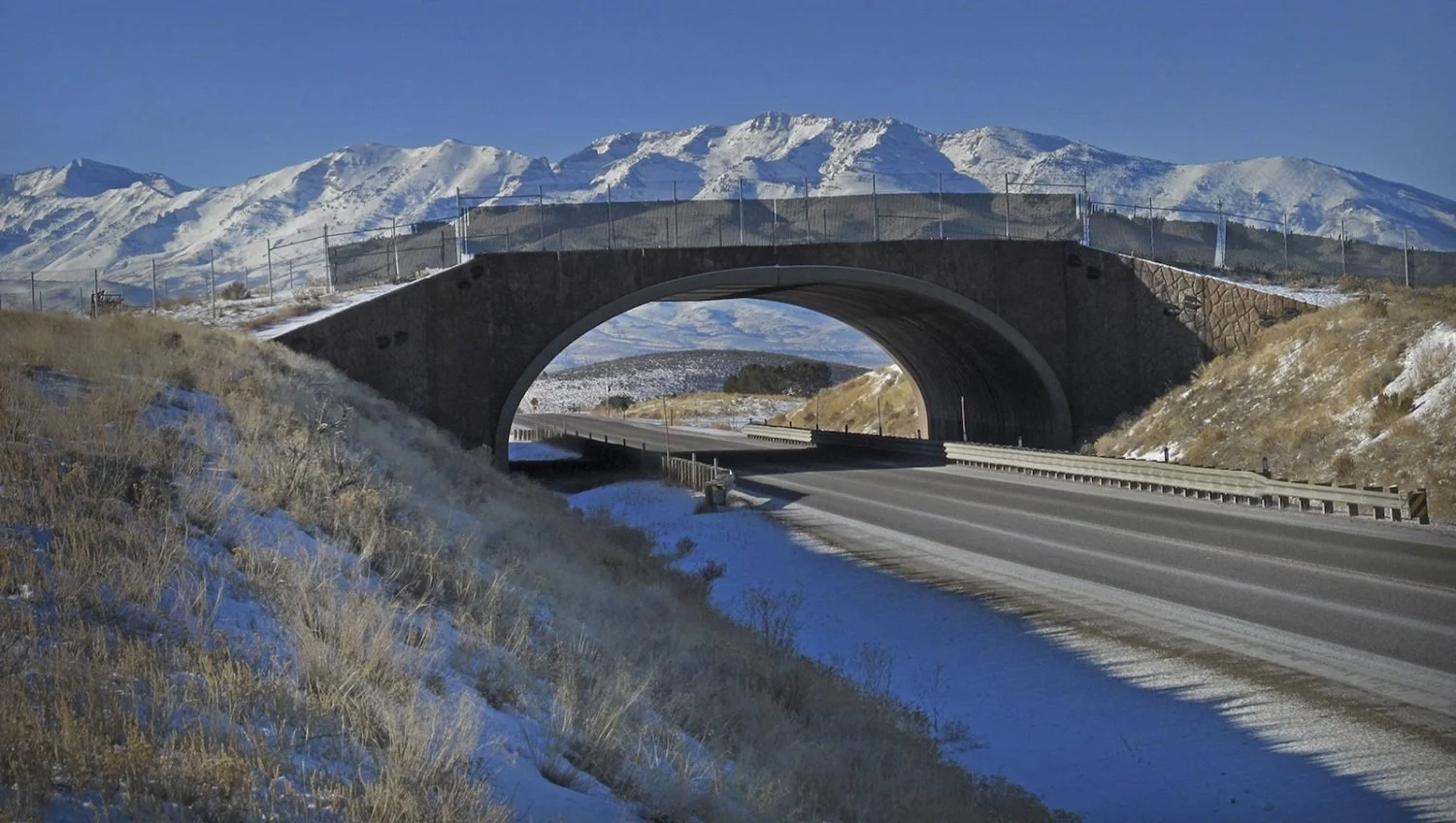
A Nevada wildlife crossing. Credit: Nevada Department of Wildlife, Public Domain
We’ve all seen roadkill.
You may have even been the unlucky driver, the one who came around a bend to find a deer already in the road with no time to brake. If you have, you’re not the only one.
In the U.S., about 1-2 million wildlife-vehicle collisions with large animals occur every year. On average, these crashes result in 26,000 human injuries, 200 human deaths and nearly $8 billion in property damage each year.
That’s not even considering the damage to wildlife, species and ecosystems. A report to Congress found that more than 360 million vertebrate animals, big and small, are killed by vehicles in the U.S. annually.
The carnage on our roads is the most visible cost of slicing wildlife habitat into pieces with highways. But this habitat fragmentation also reduces the space that animals have to graze, hunt, mate and migrate, resulting in even greater harm to wildlife.
From mountain lions to turtles, elk to black bears, animals face a lose-lose decision: Cross a busy, dangerous road, maybe even at the cost of your life, or get penned into an ever-shrinking habitat that may not have the resources needed for your long-term survival.
The fate of P-22, a mountain lion who lived in Los Angeles
One example of this lose-lose situation is P-22 — a beloved Los Angeles mountain lion whose death remains in residents’ minds.
P-22 somehow crossed several of Los Angeles's busiest freeways before settling into Griffith Park, in the middle of the city. His territory was the smallest ever recorded for an adult male mountain lion — yet he managed to live there for nearly a decade. Hemmed in by a maze of roads, he never found the mate he kept searching for. In 2023, he was struck by a vehicle and, because of his injuries, had to be euthanized.
P-22’s story is not unique — animals need to get across these busy roads.
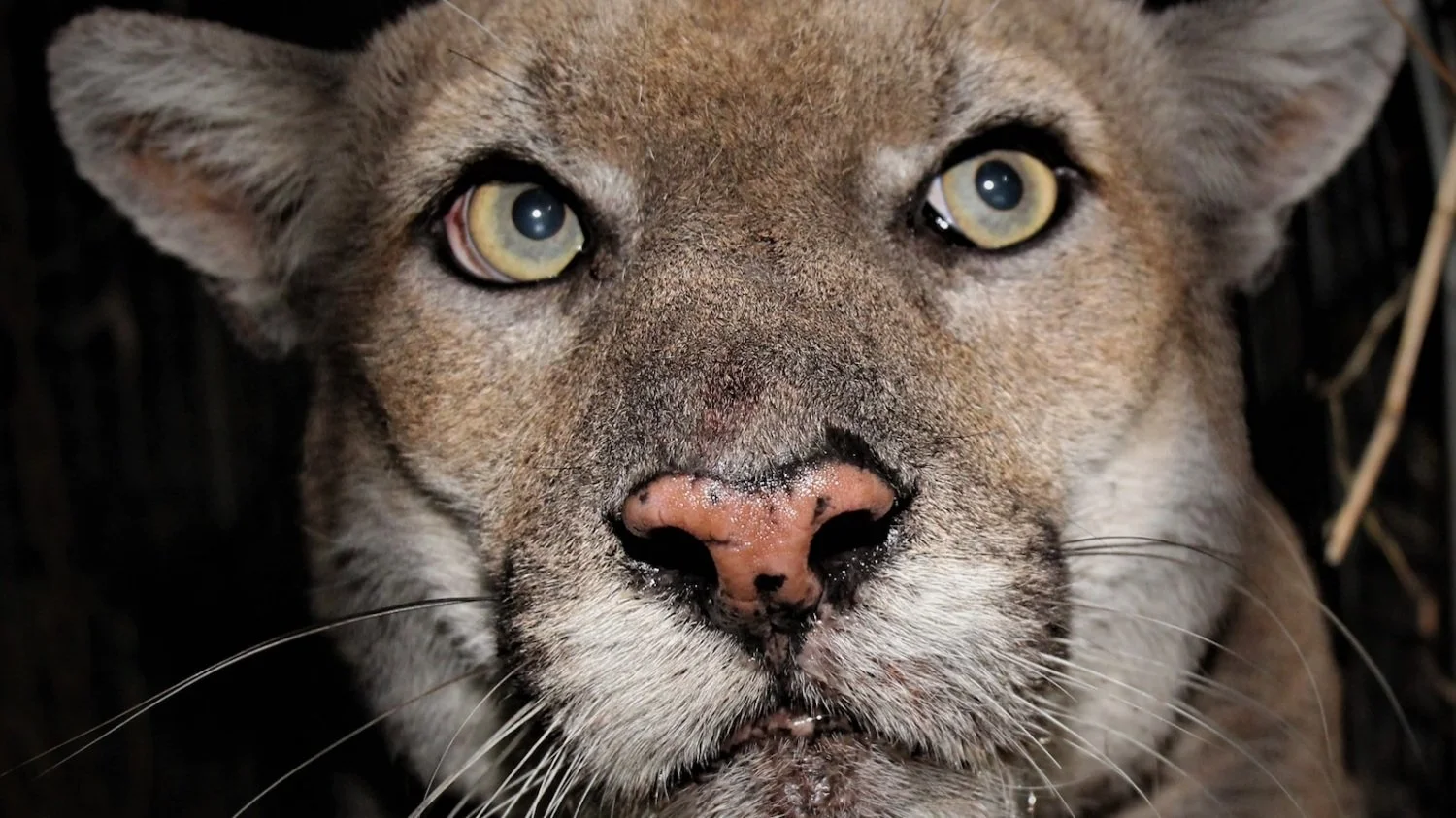
The iconic “P-22” caught on camera. Credit: National Park Service, Public Domain
A staggering drop in animal populations
These vehicle-wildlife collisions are set against the troubling backdrop of rapidly declining wildlife populations.
Researchers at the World Wildlife Fund and the Zoological Society of London conducted a long-term study of 5,495 mammals, reptiles, amphibians and bird populations in North America over half a century. They found a roughly 39% decline in North American animal populations between 1970 and 2020.
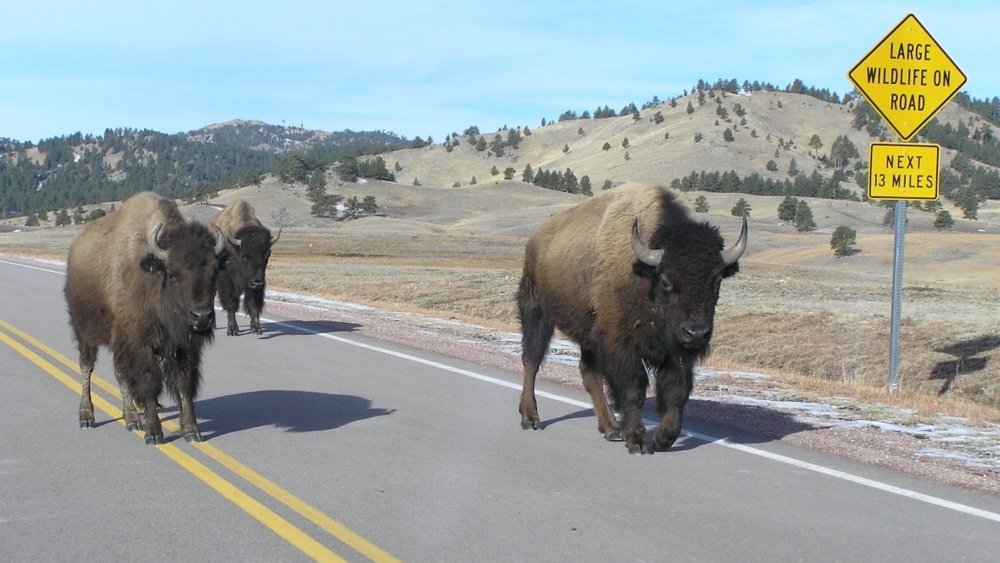
A group of bison meander across a roadway. Credit: NPS Photos, Public Domain
On top of that, state wildlife agencies have flagged more than 12,000 North American species as needing extra conservation help to keep them from sliding toward extinction.
Vehicle-collisions are far from the sole driver of this decline, but they certainly aren’t helping. Nor is habitat fragmentation. The good news is that there’s a fix that’s already working.
Giving animals room to roam
Wildlife crossings are exactly what they sound like — structures that let animals get to the other side of a road safely. Bridges carry them over the traffic, while tunnels and culverts route them underneath. When paired with fencing and other infrastructure, these crossings can allow animals to get across our roads in designated, safe locations.
But, do animals actually use them? So far, the results from the more than 1,000 wildlife crossings now operational in the U.S., are promising. When placed in areas of known wildlife movement and paired with additional elements like fencing, crossings have reduced wildlife-vehicle collisions by up to 97%.
For instance:
One bridge spanning Interstate 80 in Utah, saw animals quickly adapt to the new structure, giving moose, bears, deer and elk a much safer way to migrate and cross this busy roadway. Check out this video to see some of the crossing’s patrons first-hand.
In Arizona, between 2011-2020, one wildlife overpass was used more than 6,000 times by wildlife, including bighorn sheep, foxes, bobcats, pronghorn and coyotes.
A series of crossings over the Trans-Canada Highway, near Banff National Park, have reduced collisions on the roadway by roughly 80%, regardless of species.
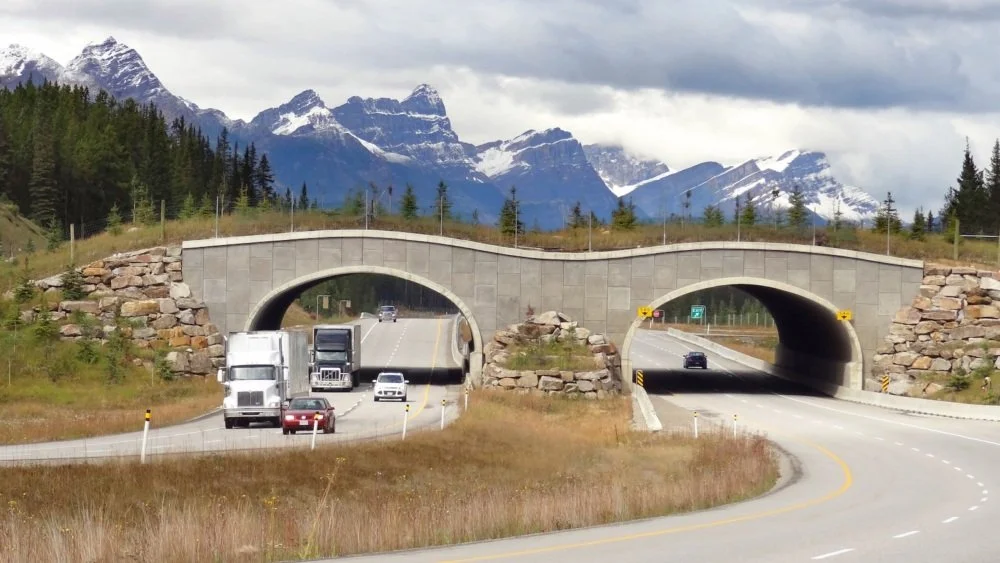
One of the wildlife crossings that spans the Trans-Canada highway near Banff. Credit: WikiPedant, CC-BY-SA-4.0
A big upfront investment. Long-lasting returns.
One major drawback to the construction of these crossings is the initial cost. Given the size of this infrastructure, states and communities may be wary of the price tag.
However, one Washington State University study determined that each overpass saved between $235,000 and $443,000 per year as they reduced collisions, property damage, medical bills and costs from loss of life.
So while the initial investment may be steep, some crossings effectively pay for themselves over time.
There’s already money to build crossings
In 2021, Congress passed the Bipartisan Infrastructure Law, which created a $350 million Wildlife Crossings Pilot Program — a grants program that states apply to in order to build crossings and corridors. So far, 29 states have received funding. Many states are chipping in their own dollars too, sometimes to match federal grants and sometimes to go it alone.
Here’s the catch: the entire program — funding and all — expires on September 30, 2026.
It doesn’t have to end there. There are three bipartisan bills in Congress to renew the Wildlife Crossing Program. With bill sponsors hailing from both parties and representing Maryland, New Mexico, North Dakota, Oregon, Utah and Virginia, you can tell that this is a popular program across the U.S. But while popular is a good starting place, there’s no guarantee that Congress will get this across the finish line.
How you can help
To renew this program, lawmakers in Washington need to hear from people across the country. That's why we're calling on Congress to pass a bipartisan bill to keep wildlife crossings funded — across the U.S. and in our own states.
And that's why, this summer, we'll be knocking on doors and having conversations in communities in Maine, North Carolina, Utah, Wyoming and Washington, D.C., getting people involved. Together, we'll be gathering petition signatures, making phone calls and meeting with lawmakers to make the case for safe passage.
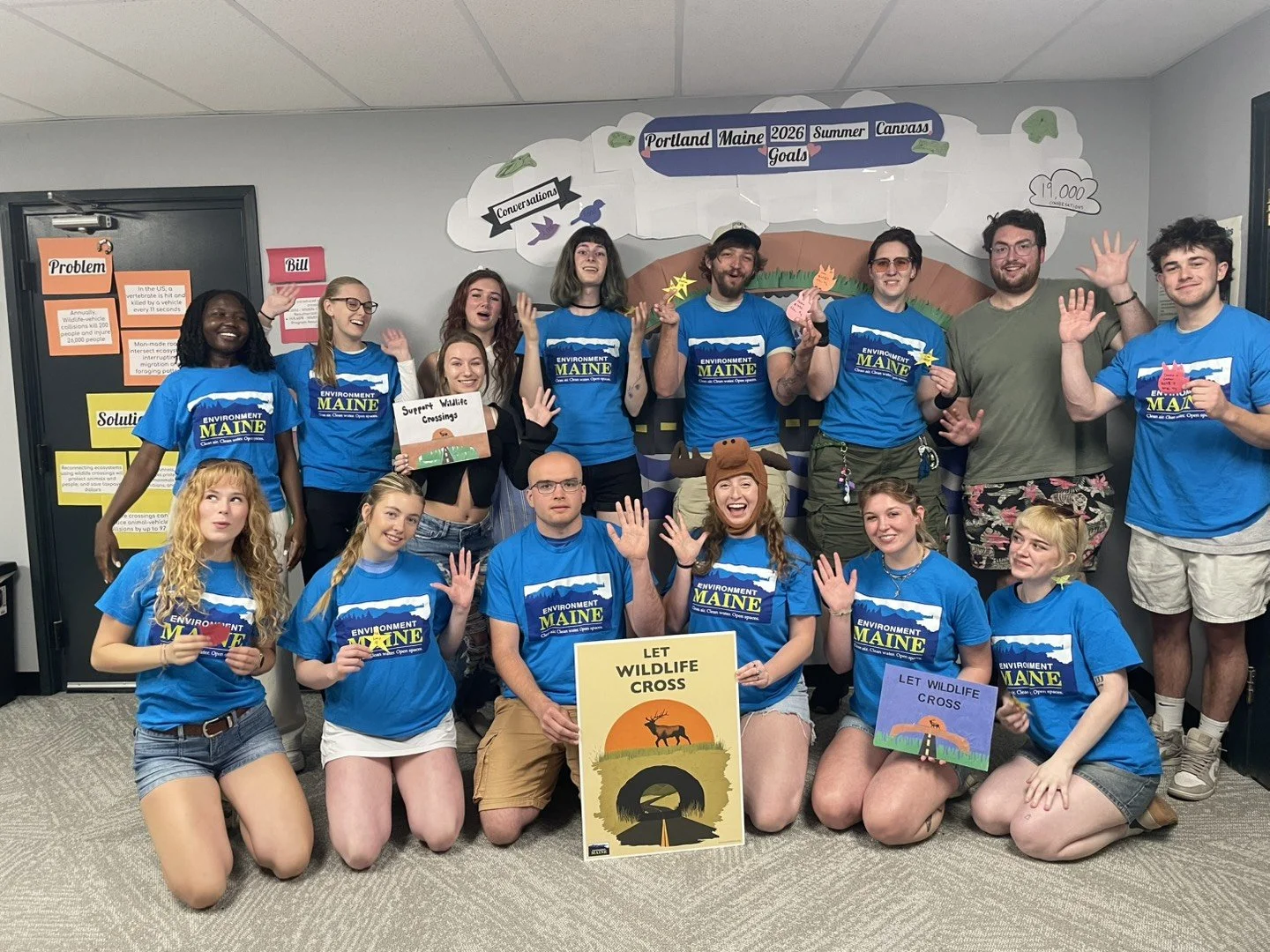
Environment Maine canvassers build support for wildlife crossings. Credit: Staff
If they hear enough of us, Congress can act before the deadline to renew and expand the Wildlife Crossings Pilot Program, and we can keep building crossings that cut collisions, reconnect habitat and save lives, human and animal alike.
If we come together around this commonsense issue, we can keep building wildlife crossings for all the creatures that need room to roam.